Read more of this story at Slashdot.
If you’re building and maintaining Visual Studio extensions, you’ve probably ended up with some sort of build and publishing workflow – whether it’s manual, scripted, or stitched together over time.
This post is for extension authors who want a simple, repeatable way to build, version, and publish their VSIX files using GitHub Actions.
I’m going to show how I do this across my own extensions.
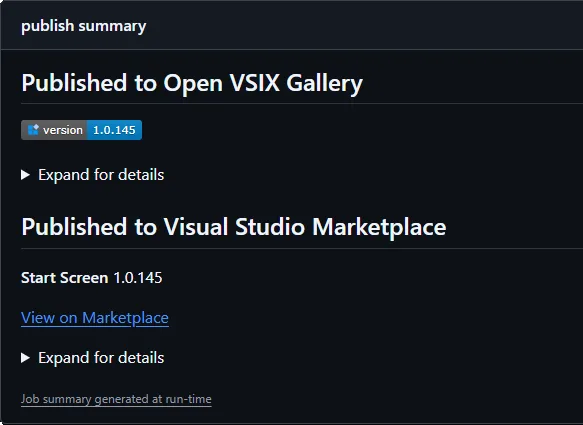
I’ve been using this approach for a long time, and over time I pulled the most repetitive pieces into a few small reusable actions, so I don’t have to keep rewriting the same logic in every repo.
Those are:
You can use them independently or together, but I tend to use all three.
If you want to see this wired up in a real repo, take a look at Start Screen.
A real workflow
Here’s a simplified setup very similar to what I use across my extensions today:
name: Build
on:
push:
branches: [ main ]
pull_request:
branches: [ main ]
jobs:
build:
runs-on: windows-latest
env:
Configuration: Release
VsixManifestPath: src\source.extension.vsixmanifest
VsixSourcePath: src\source.extension.cs
steps:
- uses: actions/checkout@v6
- name: Setup MSBuild
uses: microsoft/setup-msbuild@v3
- name: Restore
run: msbuild /t:Restore
- name: Version stamp
uses: madskristensen/vsix-version-stamp@v2
with:
manifest-file: ${{ env.VsixManifestPath }}
vsix-token-source-file: ${{ env.VsixSourcePath }}
- name: Build
run: msbuild /p:Configuration=$(Configuration)
- name: Publish to VSIX Gallery
uses: madskristensen/publish-vsixgallery@v1
with:
vsix-file: '**/*.vsix'
- name: Publish to Marketplace
uses: madskristensen/publish-marketplace@v2
with:
extension-file: '**/*.vsix'
publish-manifest-file: vs-publish.json
personal-access-code: ${{ secrets.VS_MARKETPLACE_TOKEN }}
This is essentially the full pipeline – version, build, package, and publish.
From here, you can tweak when publishing happens (for example, only on releases), but the core setup tends to stay the same.
Versioning is one of those things that’s easy to get wrong.
The vsix-version-stamp action updates your version during the build, so you don’t have to think about it.
It works especially well together with the VSIX Synchronizer extension, which generates a .cs file from your .vsixmanifest.
That gives you:
It’s completely optional, but once you start using it, it tends to stick.
Once you have a VSIX, publishing it to the Marketplace is straightforward.
You only need a single secret:
- name: Publish to Marketplace
uses: madskristensen/publish-marketplace@v2
with:
extension-file: '**/*.vsix'
publish-manifest-file: vs-publish.json
personal-access-code: ${{ secrets.VS_MARKETPLACE_TOKEN }}
That’s it.
The VSIX contains the extension metadata, and the publish manifest fills in the rest.
The publish-vsixgallery action serves a different purpose.
It’s for quickly sharing builds.
I primarily use it when I want someone to try out a fix or validate a change before it goes to the Marketplace.
- name: Publish to VSIX Gallery
uses: madskristensen/publish-vsixgallery@v1
with:
vsix-file: '**/*.vsix'
That’s what VSIX galleries are great for – fast, lightweight distribution without the overhead of a full release.
Works with your own gallery too
VSIX Gallery is open source, so you can host your own instance if you want.
The GitHub Action supports a configurable gallery-url, so it’s not tied to a specific hosted gallery.
- name: Publish to VSIX Gallery
uses: madskristensen/publish-vsixgallery@v1
with:
vsix-file: '**/*.vsix'
gallery-url: 'https://your-gallery.example.com'
That lets you use the same workflow whether you’re targeting a public gallery or something you host yourself.
You don’t have to use all three actions.
Some common setups:
Minimal
CI-focused
Full pipeline
Use what fits your workflow.
Most extensions benefit from using both:
This is the setup I use across my extensions.
It keeps things predictable, makes it easy to share builds, and removes most of the repetitive steps from the release process.
You don’t need to adopt all of it. Start with the parts that make sense for your workflow and build from there.
The post Automating your Visual Studio extension builds with GitHub Actions appeared first on Visual Studio Blog.
Windows provides a family of functions for accessing so-called “extra bytes”. There are two categories of extra bytes: Class extra bytes (which belong to the window class) and window extra bytes (which belong to each window created from that class). Applications can request extra bytes at class registration, and those are accessed at increasing offsets starting at zero. The system also defines a number of extra bytes, and those use negative offsets.
We’re going to look at the system-defined offsets.
In 16-bit Windows, these were the available extra bytes and the function you used to read them:
| Name | Size | Accessor | Notes |
|---|---|---|---|
| GCW_MENUNAME | int16_t | GetClassWord | |
| GCW_HBRBACKGROUND | int16_t | GetClassWord | |
| GCW_HCURSOR | int16_t | GetClassWord | |
| GCW_HICON | int16_t | GetClassWord | |
| GCW_HMODULE | int16_t | GetClassWord | |
| GCW_CBWNDEXTRA | int16_t | GetClassWord | |
| GCW_CBCLSEXTRA | int16_t | GetClassWord | |
| GCL_WNDPROC | int32_t | GetClassLong | |
| GCW_STYLE | int16_t | GetClassWord | |
| GCW_ATOM | int16_t | GetClassWord | Added in Windows 3.1 |
| GWL_WNDPROC | int32_t | GetWindowLong | |
| GWW_HINSTANCE | int16_t | GetWindowWord | |
| GWW_HWNDPARENT | int16_t | GetWindowWord | |
| GWW_ID | int16_t | GetWindowWord | |
| GWL_STYLE | int32_t | GetWindowLong | |
| GWL_EXSTYLE | int32_t | GetWindowLong | Added in Windows 3.0 |
| DWL_MSGRESULT | int32_t | GetWindowLong | For dialog windows |
| DWL_DLGPROC | int32_t | GetWindowLong | For dialog windows |
| DWL_USER | int32_t | GetWindowLong | For dialog windows |
There is clearly a naming pattern here for class and window bytes.
The first letter G stands for Get. The second letter C or W stands for Class or Window. And the third letter W or L stands for Word or Long.¹
For window bytes that apply only to dialog windows, the first letter changes to D for “dialog”. These values are zero or positive, since they are really just extra bytes registered to the standard dialog class.
Now, in 16-bit Windows, handles were 16-bit values, but in 32-bit Windows, they expand to 32-bit values, so 32-bit Windows changed the functions from GetSomethingWord to GetSomethingLong, and the prefixes correspondingly changed from W to from L. So our table now looks like this:
| Name | 16-bit prefix/size | 32-bit prefix/size |
|---|---|---|
| MENUNAME | GCW_ int16_t | GCL_ int32_t ◱ |
| HBRBACKGROUND | GCW_ int16_t | GCL_ int32_t ◱ |
| HCURSOR | GCW_ int16_t | GCL_ int32_t ◱ |
| HICON | GCW_ int16_t | GCL_ int32_t ◱ |
| HMODULE | GCW_ int16_t | GCL_ int32_t ◱ |
| CBWNDEXTRA | GCW_ int16_t | GCL_ int32_t ◱ |
| CBCLSEXTRA | GCW_ int16_t | GCL_ int32_t ◱ |
| WNDPROC | GCL_ int32_t | GCL_ int32_t ◱ |
| STYLE | GCW_ int16_t | GCL_ int32_t ◱ |
| ATOM | GCW_ int16_t | GCW_ int16_t |
| HICONSM | GCL_ int32_t ![]() |
|
| WNDPROC | GWL_ int32_t | GWL_ int32_t ◱ |
| HWNDPARENT | GWW_ int16_t | GWL_ int32_t ◱ |
| ID | GWW_ int16_t | GWL_ int32_t ◱ |
| STYLE | GWL_ int32_t | GWL_ int32_t |
| EXSTYLE | GWL_ int32_t | GWL_ int32_t |
| USERDATA | GWL_ int32_t ![]() |
|
| MSGRESULT | DWL_ int32_t | DWL_ int32_t |
| DLGPROC | DWL_ int32_t | DWL_ int32_t |
| USER | DWL_ int32_t | DWL_ int32_t |
The ◱ symbol represents a value that got bigger, and the
symbol represents values that did not exist in 16-bit Windows.
Even though control IDs are typically small integers, the space for them was expanded from a 16-bit value to a 32-bit value because some people were using it to hold pointers or handles. (One way to create a process-wide unique number is to allocate memory and use its address.)
The next step in the evolution of extra bytes is the conversion from 32-bit to 64-bit Windows. Pointers and handles expand to 64-bit values on 64-bit Windows, so all of the extra bytes that are used to (or could be used to) hold a handle or pointer were expanded to a 64-bit version.
To make it possible to write code that targets both 32-bit and 64-bit Windows, the design of 64-bit Windows didn’t make the hard break that 32-bit Windows did from 16-bit Windows. Instead, they introduced new functions that accept pointer-sized integers, which are 32-bit values on 32-bit Windows and 64-bit values on 64-bit Windows. That way, you just use those new functions everywhere, and they will expand on 64-bit systems and remain the same on 32-bit systems.
The new functions have names like GetWindowLongPtr, and the corresponding prefixes were changed to GWLP_ and so on.
| Name | 16-bit prefix/size | 32-bit prefix/size | 32/64-bit prefix/size |
|---|---|---|---|
| MENUNAME | GCW_ int16_t | GCL_ int32_t ◱ | GCLP_ intptr_t ◱ |
| HBRBACKGROUND | GCW_ int16_t | GCL_ int32_t ◱ | GCLP_ intptr_t ◱ |
| HCURSOR | GCW_ int16_t | GCL_ int32_t ◱ | GCLP_ intptr_t ◱ |
| HICON | GCW_ int16_t | GCL_ int32_t ◱ | GCLP_ intptr_t ◱ |
| HMODULE | GCW_ int16_t | GCL_ int32_t ◱ | GCLP_ intptr_t ◱ |
| CBWNDEXTRA | GCW_ int16_t | GCL_ int32_t ◱ | GCL_ int32_t |
| CBCLSEXTRA | GCW_ int16_t | GCL_ int32_t ◱ | GCL_ int32_t |
| WNDPROC | GCL_ int32_t | GCL_ int32_t ◱ | GCLP_ intptr_t ◱ |
| STYLE | GCW_ int16_t | GCL_ int32_t ◱ | GCL_ int32_t |
| ATOM | GCW_ int16_t | GCW_ int16_t | GCW_ int16_t |
| HICONSM | GCL_ int32_t ![]() |
GCLP_ intptr_t ◱ | |
| WNDPROC | GWL_ int32_t | GWL_ int32_t ◱ | GWLP_ intptr_t ◱ |
| HWNDPARENT | GWW_ int16_t | GWL_ int32_t ◱ | GWLP_ intptr_t ◱ |
| ID | GWW_ int16_t | GWL_ int32_t ◱ | GWLP_ intptr_t ◱ |
| STYLE | GWL_ int32_t | GWL_ int32_t | GWL_ int32_t |
| EXSTYLE | GWL_ int32_t | GWL_ int32_t | GWL_ int32_t |
| USERDATA | GWL_ int32_t ![]() |
GWLP_ intptr_t ◱ | |
| MSGRESULT | DWL_ int32_t | DWL_ int32_t | DWLP_ intptr_t ◱ |
| DLGPROC | DWL_ int32_t | DWL_ int32_t | DWLP_ intptr_t ◱ |
| USER | DWL_ int32_t | DWL_ int32_t | DWLP_ intptr_t ◱ |
From the prefix on the name of the extra bytes, you can read off which function it is meant to be used with.
| Prefix | Function |
|---|---|
GCW_ GetClassWord |
GWW_ GetWindowWord |
GCL_ GetClassLong |
GWL_ GetWindowLong |
GCLP_ GetClassLongPtr |
GWLP_ GetWindowLongPtr |
The weirdo is DWLP_ because it needs to encode both the type of window that it can be used with (D = dialog) as well as the function name it goes with (WindowLongPtr).
As a concession, Windows lets you pass GCL_ and GWL_ values to GetClassLongPtr and GetWindowLongPtr (respectively) even though they are intended to be used with GetClassLong and GetWindowLong (respectively). If you do that, you get the corresponding 32-bit value zero-extended if necessary to be the size of a pointer.² This is seen primarily in the case of GWL_ID because most people don’t use the full range of IDs, so if you’re willing to live within the 32-bit subset, you can just pretend that the values are not pointer-sized.³
“Why bother changing all the prefixes? Doesn’t that just create a lot of busy work for people porting from 32-bit code to 64-bit code?”
Yes, but it’s good busy work. The point is to force build breaks at places where you need to make fixes, because you have to call the function that accesses a pointer-sized integer rather than a 32-bit integer; otherwise you suffer from integer truncation bugs.
¹ This is a common prefixing convention for classic Win32. For example, the operation parameter to ShowWindow is prefixed SW_; the flags to SetWindowPos are prefixed SWP_; and the relationship parameter for GetWindow is prefixed GW_.
² The use of the GWL_ values with SetWindowLongPtr is a bit more problematic. It looks like you’re storing a pointer-sized integer, but only the bottom 32 bits are honored.
³ The ID is unusual in that it is defined both as GWL_ID and GWLP_ID. All of the other values are defined with only one prefix.
The post The evolution of window and class extra bytes in Windows appeared first on The Old New Thing.
Read more of this story at Slashdot.
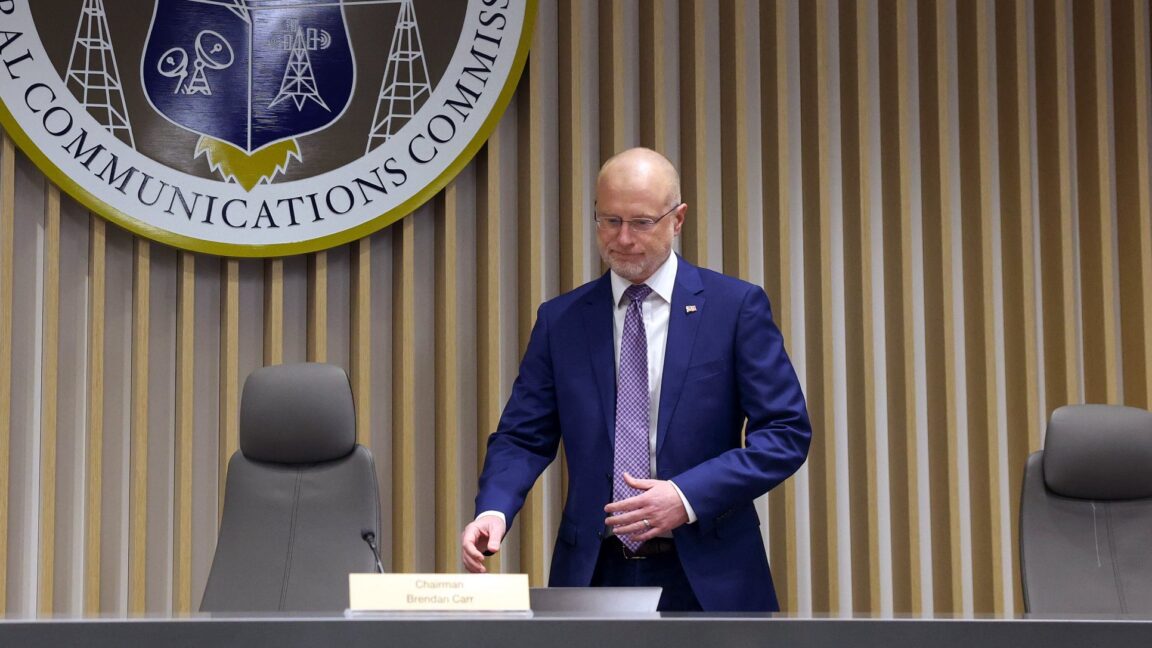
An advocacy group trying to investigate DOGE's influence on the Federal Communications Commission accused the FCC of failing to comply with a public records request and of concealing Chairman Brendan Carr's use of the Signal messaging service.
"The evidence clearly demonstrates that the FCC has acted in bad faith by withholding documents responsive to Plaintiffs’ FOIA [Freedom of Information Act] request," journalist Nina Burleigh and advocacy group Frequency Forward said in a filing yesterday in US District Court for the District of Columbia. "The FCC acted in bad faith when it redefined the search criteria without notice to Plaintiffs or this Court. Further, the FCC acted in bad faith by concealing the fact that the Chairman Carr has a Signal account on a phone he uses to conduct government business."
Burleigh and Frequency Forward sued the FCC last year, alleging that it violated the Freedom of Information Act by wrongfully withholding agency records. In August 2025, a federal judge ordered the FCC to produce documents and criticized it for a “vague and uninformative” response to the lawsuit.
The plaintiffs filed the initial FoIA request in February 2025 for an investigation into how DOGE's activities at the FCC may have created conflicts of interest related to Elon Musk's SpaceX and Starlink, which are seeking various FCC licenses and authorizations.
"The evidence strongly suggests that Musk bought his way into the White House and to obtain his position as the de-facto head of DOGE, and that he had used his government authority and access to information to earn huge profits for himself and his companies," plaintiffs said yesterday. "Plaintiffs’ FoIA request seeks documents that shed light on the relationship between the FCC, Musk as regulator and Musk and his companies as regulated entities."
Burleigh and Frequency Forward asked the court to deny an FCC motion for summary judgment, order the agency to produce all responsive documents within a week, and allow the plaintiffs to file discovery requests. Their filing accused the FCC of having "wasted a year of the Court’s time and frustrated Plaintiffs’ efforts to timely review critical records."
The FCC "has sought to delay the production of responsive documents and obfuscate the existence of responsive records," and "made it clear that it will not undertake a good faith effort to produce responsive documents," the filing said. "Accordingly, discovery is required and will speed the document production process by helping the Plaintiffs identify responsive documents."
The filing said there is evidence that Carr has Signal messaging set up on a phone he uses for FCC business. Carr's phone number was previously disclosed in a FoIA request that turned up a November 2024 email from a Fox News producer who was confirming an interview. Entering that "number into the Signal app shows that he has an active Signal account under the username 'Brendan Carr,'" the filing said.
A court filing submitted by the FCC on June 3 said that Carr did not have phone numbers for DOGE personnel and that "it is agency policy not to download additional messaging applications on FCC phones (e.g., Signal, WhatsApp)." Plaintiffs counter that Carr likely exchanged messages with Musk or other high-ranking DOGE officials.
"Plaintiffs do not know whether the number identified in Exs. 4 and 5 belongs to Carr’s personal phone or a government issued phone," the filing said. "What we do know is that a phone is being used for government business and that it has a Signal account in Carr’s name. Based on information and belief Carr regularly conducts government business through text and Signal messages, communicating with journalists, industry professional and individuals who work for regulated entities, such as Musk and SpaceX."
Plaintiffs said the FCC's statement that Carr did not have phone numbers for DOGE personnel doesn't settle the matter.
"It is unlikely that Carr would have communicated with individuals at that level. Carr would have communicated with Musk or other highly placed DOGE officials," the filing said. Plaintiffs said a previous case involving DOGE showed that "DOGE personnel routinely conducted business on their personal phones using text messages, especially the Signal app."
The filing separately accused the FCC of limiting its records search to emails with FCC, DOGE, and GSA (General Services Administration) domains, despite plaintiffs' objections. It also said that travel documents provided by the FCC did not include anything about Carr's visits to Starlink facilities.
We contacted the FCC today and will update this article if it provides any comment.
Read more of this story at Slashdot.